Tuesday, June 23, 2009

Update for June 2009

NEUROLEADERSHIP NEWS
The early bird for the Summit in LA in October closes June 30. Click here for a complete program. There is an amazing line up of speakers and topics, with salons recently added, including Neuroscience & Spirituality. We have Warren Bennis, Daniel Siegel, Werner Erhard and other fascinating minds together for two days. Learn more.

Also, there's a whole new website now up for the NeuroLeadership field,
check it out.

The first NeuroLeadership formal Graduate Certificate is going ahead as planned, we're planning to start the first program in September this year.

If you are thinking of writing a paper to put into the NeuroLeadership Journal, you have till end of July to submit. Find out more here.

BLUESCHOOL UPDATE
The first BlueSchool gala was amazing! We raised over $500,000 at a time when no one was raising any money, to help the school achieve it's mission. Already some very interesting projects are in the works that will involve the school being a 'vision of what's possible' in education. It's exciting to be involved in creating a new school from the ground up. Learn more about the school here.

There are three job opening at the school: we are looking for a Development Director (fund raising), as well as a business manager, and a part time teacher of two year olds with Music experience. Contact humanresources@blueman.com for more info on either role.

The video by BlueSchool board member Sir Ken Robinson is one of the most popular at the TED conference website, check it out, it's quite amazing. It's called 'how schools kill creativity'.

NEW BOOKS

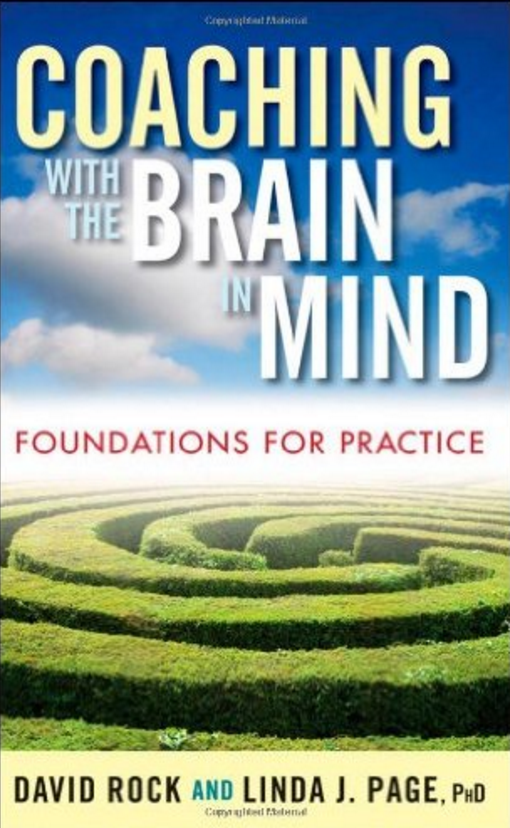
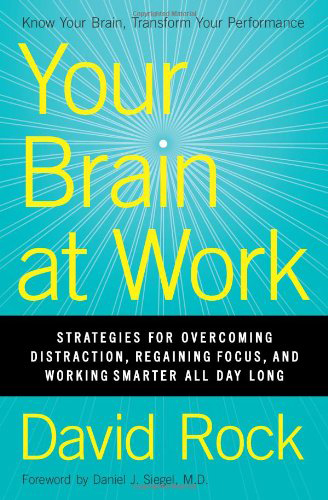
Your Brain at Work and my text book with Linda Page Coaching with the Brain in Mind are now available for pre-order. Am working on some open public events in NYC to launch Your Brain at Work in October. Am very excited about the feedback about this book, see what Warren Bennis had to say about it...

RCS NEWS
I just had a wonderful weekend in Prague with people running RCS regions around the world. I was reminded of how important it is to regularly step out of everyday thinking and leave space for 'higher level' thoughts. It's much easier to do when you are in a new place, without work filling your mind. Subtle thoughts require a quiet mind. RCS continues to run Brain-Based Coach Certification programs worldwide, now in 15 countries, and deliver wide scale programs for large organizations. We recently opened in Finland and shortly in Brazil. RCS has a whole new website in the last few months too.

PERSONAL UPDATE

Have recently given talks in Tokyo (at the first TED in Tokyo), Singapore, Oxford University, in Prague with a senior Czech economist and the leadership team of a large bank, and at several large corporations across the US. It's wonderful being able to share insights about the brain and help people learn about themselves. I get very energized seeing people uncover important and unexpected findings, and am seeing the SCARF model have a big impact. Am working on a paper on this to come out in strategy+business magazine soon.

My favourite topic is teaching the neuroscience of mindfulness, both with theory and exercises. We did this in Oxford with people out on the lawn one afternoon.

Also we recently started a 'family blog' (actually Lisa Rock did all the work) for people who want to know where we are, what the kids are up to etc. Be warned, it's all a bit too cute!

Finally, I have decide to regularly use my Twitter account now to stay more in touch with people, you can find me at davidrock101 on twitter. I will post each week on research, events, ideas of interest.

That's plenty for now!

Monday, May 18, 2009

My new book - Your Brain at Work now available for Pre-Order

My new book is now up on Barnes and Noble and Amazon for pre-order.

It's called Your Brain at Work.

It's the story of two people over one day at the office, and what's happening in their brains that makes work so hard. It's based on interviews with 30 neuroscientists that I did around the world over four years. The fun part is it's written as a story, and it shows you not just why things go wrong, but how to be more effective by understanding your brain.

Am putting up a video and more information soon on a dedicated website, but for now if you want to pre-order you can, on Amazon or via any bookstore. It will be out this October.

Wednesday, April 08, 2009

April 09 update

Hi everyone,

Lots of people have been asking me about ways to further their learning about the brain, beyond just reading some books. There are a couple of options emerging now for this, a Graduate Certificate, and a short program.

Graduate Certificate in the Neuroscience of Leadership
The rumors are true: A Graduate Certificate in the Neuroscience of Leadership is launching this year. This program will be academically certified by a UK university (credits accepted worldwide). Download a program overview here. We are also looking for people to give feedback about their interest in this program, click here to fill in a quick form.

Theoretical Foundations of Coaching – starts May 12
If you'd like to study the theory behind coaching, especially focused on the links to the brain, but can't take a year to do this, another option is this Theoretical Foundations program. This is a short but intense training program for change agents and coaches who want to dive deeper into the brain basis of change. It's a 12 week, distance learning program for people in the US and other regions. It only runs once a year or so for any one country. Click for info.

An amazing new vision for education
I am just back from the BlueSchool Gala, which was one of the most inspiring and wonderous nights. We raised over $500,000 at a sold-out event with 400 people in Manhattan. Watch a brief video I did about the school, there is also a fantastic video from TIME magazine, with interviews with the founders.

NeuroLeadership Summit Update
The theme this year is 'Toward Integration', and us such this year we are including some leadership experts in the dialogue. Warren Bennis will be sharing his views on change, as will one of the greats of transformation, Werner Erhard. People from a dozen countries are already booked to attend. If you want to be there, it will be good to book early, numbers are limited to 200. Also if you’re planning to get along, I encourage you to purchase audio from earlier summits, to learn from previous year’s sessions. Each year builds on and adds to previous knowledge. There is more background about this year's event on the summit blog site.

New books on the brain
Jonah Lehrer has a new book, ‘How we decide’, which I think is great, and is doing very well. Jonah is another person who is translating neuroscience findings to make it accessible to more people. He participated briefly in the NeuroLeadership Summit last year in NYC, this year he will be featured in LA. I did a fun interview with him which you might enjoy, it’s free to download.

Personal highlights of the last three months
Fitting in some snowboarding recently was a real treat…it took a lot of work to make it happen but reminded me of the importance of switching off at times to let the brain recover. Being 10,000 ft up is great for thinking big thoughts, especially in a country where you can't speak a word of the language - seems to quiet the brain, allowing for new thoughts.

Teaching at Oxford University was fascinating. I had people from around 16 different countries for a day, diving into the brain and leadership. Definitely a highlight was getting to meet Jon Stewart in the flesh at the BlueSchool Gala.

I often get asked if I am ever home with my family. The answer is 'not much'. But the other part of the answer is that I bring my family along with me a lot. The kids actually love to travel and explore new cultures. When I am home, I get to appreciate the beauty of Sydney, and the ocean where I live. And the beauty of my two daughters - here is India, my younger daughter, now two, enjoying some chocolate at Easter.

Where I am speaking coming up
May - Best of OD Summit, Chicago
May - Happiness and it’s causes conference, Sydney
May - The first TED conference in Tokyo
June - Public event in Singapore
June - Oxford University, Said Business School
June - Public events in Prague
July - SHRM international conference, New Orleans

Also...
August - India
September - New Zealand
September - Italy
October and November - Many events launching my new book 'Your brain at work'

Thursday, January 29, 2009

A big start to the year

One thing I have learned about brains is how easily they focus on 'potential threats', and how debilitating this is. An increase in any type of uncertainty can do this. In light of this discovery, and despite knowing full well what is happening in the world, I am focusing on staying in a 'toward' state of mind, finding new connections, making new friends, finding ways of making a difference. I trust that many of you reading this are doing the same.

Here are some of the fun things I am involved in lately. I hope there are things in here that help you make new connections too.

2009 NeuroLeadership Summit open for registrations
In 2009 there will be one global summit, in Los Angeles at UCLA, where many great scientists are based. Please note that numbers are limited to 150, (the number in NYC last year.) We are expecting higher demand so book early if you are keen. Keynotes include Daniel Siegel, author of The Developing Mind, Matt Lieberman, one of the founders of Social Neuroscience, Marco Iacoboni, and other thought leaders in neuroscience. Click here for info or to register.

First Edition of the NeuroLeadership Journal out now
The first edition of the journal is now out, I am really excited by what it represents and the ideas presented. There are papers on insight, mindfulness, emotional regulation, testing the brain, collaboration and more. You can order a copy by becoming a member of the Institute. I have created PDF's of the introductory paper, and my paper on the SCARF model. Email info@neuroleadership.org if you'd like these sent to you.

BlueSchool in the media and Gala Fund Raiser with Jon Stewart in NYC
The innovative new school that I am on the board of, The BlueSchool, was recently featured in Time Magazine, on the BBC and on NPR.
On April 2nd, The Daily Show's Jon Stewart is hosting BlueSchool's Annual Gala in NYC. Tickets are on sale now and will sell out fast, at $1000 or $2,500 for special seats. Email Beth at bmcc_rep@blueman.com for info or to book. The school is also hiring a new first grade teacher, email bradc@blueman.com for more info.

Results Coaching Systems Update - brand new website
My 'day job', running Results Coaching Systems, has expanded with RCS opening in Brazil this year, taking us to 13 different global regions. We're also proud to launch a totally new website. We were recently selected as the sole partner for Ericsson worldwide for internal coaching programs, and are now working with the US Federal Reserve.

One day 'Building a Coaching Culture' event in NYC - March 3rd.
I am running a special one day event on March 3 in NYC, similar to the ones in Dallas, Boston and Las Vegas last year, for HR and OD professionals who want to understand how to build a wider coaching culture. This covers the brain-based approach, external coaching, internal coaching and leader as coach, with lots of research and case studies on each. The short video here describes what the event is about.
video

Dramatically cut costs of coaching, while increasing the impact you make
I recently presented a session at the Conference Board in NYC, at the Executive Coaching Summit. I showed how bringing coaching in house, by developing internal competencies in organizations, can cut costs to 10% of external coaching, while significantly increasing the impact from coaching initiatives. I am running a webinar on this topic at 3pm US ET on March 2nd. Click here for more and to register.

Free audio at my podcast site
There are lots of free audios at results.podbean.com There are several neat interviews, a discusion about neuroscience and global leaders, and other cool stuff here. This site was recently voted one of the top 5 business podcasts in 2008.

Update on new books
I have two books coming out this year, both of which are a little overdue. 'Coaching with the brain in mind' (see pic on the left) will be out in July. This is a textbook published by Wiley, for people studying coaching. I have worked on this for 4 years, and finally finished it with a lot of help from Dr. Linda Page. My other book, published by Harper Collins, comes out in October. It's called 'The Brain at Work' and it follows two people as they struggle for a day at office, showing the reader what's going on in their brain and how they could be more effective as a result. It's been my most challenging and exciting project ever.

That's plenty for now!
Enjoy the new connections.

Monday, November 03, 2008

North American NeuroLeadership Summit Debrief

What happens when you get 150 change agents from 20 countries around the globe, together with the world's leading neuroscientists, to talk about the biology of decision making, managing emotions, collaborating with others and facilitating change? A tremendous number of new connections, between people, ideas and research, and new insights for developing leaders. As one participant said: 'This conference was truly historic'. (Okay, so we made up the picture on the right...)

While the first Summit was held on top of a mountain in northern Italy, this was in heart of Times Square amidst the bustle and chaos. The theme for this Summit was ‘making new connections’.

These connections were helped along by wonderful facilitation from Art Kleiner, editor of strategy+business magazine. Participants came from China, Japan, Korea, South Africa, Turkey, Romania, Slovakia, Italy, Belgium, Switzerland, UK, Denmark, Finland, Norway, Canada, US, Mexico, Peru, Brazil and Australia. About a third were from inside large organizations, a third were independent consultants or coaches and a third were educators. What they had in common was a desire to bring the science of the brain into the way they created positive change in the world.

A common quote from participants was 'I never normally go to conferences, and if I do, I don't go into sessions. Here I can't bear to miss a single talk.' This was a Summit for people doing challenging, complex change work, who wanted new tools, not the same old ideas, and wanted to learn from their peers.

Below are some of the highlights of the event. If you want to dive into this work and make your own connections, you can get the entire Summit on audio, with both slides and a recording of every session.

As well, you might want to join the NeuroLeadership Institute, or order the first edition of the NeuroLeadership Journal, on it’s way for release in the next few weeks. You can also order a DVD set of the entire 2007 first summit in Asolo, Italy.

There's some great podcasts up now, with interviews with several speakers, to hear more about the field at high-level.

Preconference – ‘Neuroscience 101’

Lila Devaci did a great job of outlining the brain overall for novices, providing a platform of knowledge for going into the summit. There was extra interest in the brain circuits for memory and emotional regulation.


Opening session – ‘How attention changes the brain’
Neuropsychiatrist Jeffrey Schwartz and physicist Henry Stapp presented a 'double-act' rich with insight about the underlying physics of how attention changes the brain. The session was held in the magnificent Hudson Theatre and provided some deep insights about the processes involved in change in the brain.


‘Why thinking has limits’
Amy Arnsten, one of the leading neuroscientists working on the prefrontal cortex, presented her research that explains why mental processes are so tiring, and how to maximize mental performance. A key theme was the importance of a sense of control for the brain.


‘The neuroscience of decision making’
Facilitated by Katharine McLennan, with Bob Eckert and Amy Arnsten, this panel discussion explored in depth some of the issues around decision-making.


‘The anatomy of an aha’
We were fortunate to have Jonah Lehrer (left), author and science writer, facilitate this rich session exploring the neuroscience of insight. Panel included Mark Jung-Beeman (right), the leading figure in the study of insight in the brain, Chris Wink, one of the founders of the Blueman group, taking about the creative process itself, and myself David Rock talking about organizational applications of insight. A great quote from Chris (that's him with the red nose): ‘I can’t even imagine having writers block now, it’s such a strange concept to me’.
The big idea: while insight is still mysterious, we are learning plenty now from the brain about how to 'stack the deck' to significantly increase the likelihood of it occurring.


‘Know thyself – the latest science of mindfulness’
Yiyuan Tang, a leading global researcher based in China and the US, presented a range of insights and science explaining mindfulness. His recent study showed the difference between 5 days of mindfulness training for 20 minutes a day, versus 5 days of relaxation training (in summary: a big difference!) Yiyuan is an inspirational, deep thinker who had a big impact on the group. You can see two people reflecting as they listen to his session here. There is more on Yiyuan’s work in the forthcoming NeuroLeadership Journal.


‘The limits of memory’
Lila Devaci delivered a powerful session on how memories are created, and how we can do better at encoding memories by understanding the brain. She had a wonderful ability to synthesize and simplify complex science to make it easy to digest (and remember!)


‘Mindfulness panel discussion’

We had an eclectic mix of people discussing mindfulness in more depth, including Yiyuan Tang, Anna Tavis from AIG and two consultants, Millie Greenough who was running the morning attention-training sessions, and Suzanne Kryder, working with senior leaders on mindfulness.

Connecting sessions
Each day had an hour for meeting other participants during the day. This allowed time for the brain to rest and digest, and to discuss ideas with scientists and other participants. Given the caliber of participants there, this proved to be a much appreciated window each day.

‘Stay cool under pressure’
Kevin Ochsner, one of the two founding father of the social neuroscience field, presented a dynamic session illustrating the neuroscience of regulating our emotions. He explored topics such as how suppression is a terrible strategy for our emotions, and the impact of reappraisal on the brain.

‘The brain is a social animal’
Matthew Lieberman, the other founding father of social neuroscience, delivered a powerful session illustrating the neuroscience behind the pains and pleasures of social life. He presented many fascinating findings around the theme of how social pains and pleasures use the same general systems as physical pains and pleasures. (My favorite study: Tylenol was reducing social pain more than a placebo in people.) There is more on this in a paper Matt published in the forthcoming NeuroLeadership Journal.

‘Panel on the neuroscience of leadership’
This was a rich discussion with John Case, ex CEO of a division of Electrolux, along with consultant Cathy Greenberg, with Diane Coutu, a senior editor with the Harvard Business Review, and Kevin Ochsner weighing in. John Case's FAT system was a highlight. The other highlight was Diane presenting the counter-argument that business isn’t ready for neuroscience yet, which was then discussed in the group.

‘Panel on education and the brain’
We heard from Al Ringleb, director and founder of CIMBA, an international business school teaching MBA students about the brain. Also Renee Rolleri, co-founder of the BlueSchool in NYC, who are integrating brain research (and soon teaching about the brain) into the way they are designing curriculum for k-12. Matthew Lieberman also participated, and the session was facilitated by an Australian educational consultant, Andrew Mowat.


A quantum theory of trust’
Karen Stephenson, one of the leading lights in social networking theory, presented a powerful session on the nature of trust and it’s role in networks. The group loved her straight-to-the-point approach and her humor, but above all her crisp insights about what really drives organizations: trust networks.


‘The neuroscience of cultural change’
This session featured Karen Stephenson discussing the ideas of changing systems in more detail, with input from Brent Oberholtzer(right), an executive from the Treasury in the US, Janet Crawford, a consultant, and Eugene Baker (left), who is collaborating with scientists to build brain based assessment techniques. This holds the promise of evidence-based assessments for leadership interventions based on changes in brain functioning, an important development in the field.
Facilitated by Cheryl Doggett, an executive from Bank of America, the session was a rich discussion about how we can use what has been discussed at the Summit to drive change in complex systems.


‘Coaching with the brain in mind’
This session featured cases from NASA, presented by their head of leadership development Chris Williams (right), and American Express by their head of coaching Scott Wigley (also right). I presented more of the theoretical framework for brain-based coaching, and Linda Page (left), who facilitated the session, presented some of the deeper foundations of brain based coaching.


‘Drive change’
This was the closing keynote for the Summit, where the ideas from all the sessions were linked together. Of special interest to people was the definition of the field into four areas of interest (see left). Also the SCARF model which summarizes much of the science emerging about collaborating with and influencing others. See the Journal for more on both of these.


What to do next if you want to make more connections to these ideas?

Become a member of the NeuroLeadership Institute, and attend members-only events in Sydney and NYC coming up.


Order the Summit audio, including speaker slides, or DVD's from the first summit.


Order the first NeuroLeadership Journal


Join a general mailing list, be first to learn about 2009 Summit(s)


Saturday, November 01, 2008

2008 media and articles

2008 was a year of significantly increasing media interest in the neuroscience of leadership and my work generally, with feature stories including:

Cover story at SHRM magazine 'The brain at work'

The Sydney Morning Herald feature story 'How to mend a blocked brain'

BOSS Magazine feature on neuroleadership

Interview in the Australian Human Resources Institute magazine

2007 media
'All in the mind' at The Guardian Newspaper (UK)
SHRM 'Smoothing change management, it's all in the mind'
strategy + business magazine 'Why neuroscience matters to executives'
Vision.org 'Neuroscience enlightens leadership'

Where I am presenting in 2009

Sunday, October 05, 2008

October 2008 Update

Well it's been quite a few months.

The Sydney NeuroLeadership Summit was a big success. We had around 130 attendees in total, from across industry and academia. The program achieved it's intent of helping to build awareness of the field and educating those interested in these ideas. You can see a general overview of the event here, or a detailed report on the sessions here.

Also I recently did a 30 minute recorded summary of the event which can be listened to for free. I am delighted to know that the insights that were developed in Sydney can be shared more widely through audio recordings. These are available for order now, along with the DVD's from the first summit in 2007.


The NYC Summit is shaping up as a bigger event, with an amazing line up of presenters. Am very looking forward to connecting with old friends and making new ones as we explore together how to improve the quality of leadership in the world, through applying recent findings from neuroscience.

Straight after the Summit I went to the UK, where I experienced several highlights of my career to date. One was working for a day with the deans of the medical schools for the NHS, somewhere in the beautiful Cotswalds. More inspiring and surprising than the beautiful surrounds was learning that such senior leaders had been given so little development on the leadership front, outside of medical training. For most in their 50's and 60's, this was the first time they had been given development opportunities on the leadership side. To me this points to the urgency of developing a framework that is more accepted by scientific, engineering, medical, and generally analytically-focused people (read 'most executives'). It was humbling yet also very fulfilling to work with such smart people, and see an impact from explaining the functioning of the brain: especially relevant and of interest to this group were the social networks of the brain.

The second highlight for me was delivering a workshop at Oxford University, at the Said Business School for graduates of their masters in change management ('Consulting and Coaching for Change'). It was inspiring to see the impact of this new science on change consultants who knew the change literature and were involved in significant change projects. It seems the neuroscience helps fill an important gap.

The final highlight of my recent trip was a week in Asolo, Italy. Again despite the incredible beauty of the place (the Venetian nobility chose this as their summer playground centuries back), it was the people who moved me much more than the environment. I had the opportunity to spend time teaching MBA's and undergrads more about the brain. In my third year of doing this, it's so clear now how much students benefit from knowing about brain functioning, making them more able to deal with the stresses of learning, but also more effective at influencing others and driving change. One of the big benefits is that students learn to manage their own mental state far better, as well as better understand that of others.

Am now getting ready for a month or so in the US, to work on the NYC NeuroLeadership Summit, launch the new Journal and connect with some US clients. I hope to connect with readers of my blog at the NYC Summit.